
Enterprise AI
AI Due Diligence on Overseas Buyers: How Far Can You Trust It?
Export teams use buyer due diligence tools to screen prospects. The algorithm pulls together company websites, registration records, and trade history fast. Because it confuses companies with the same name and cites stale data, sales staff verify each source, large deals go to official channels for review, and a manager sets the payment terms.

Export teams use overseas buyer due diligence systems to help vet trading partners. In a short time the algorithm searches company registration records, company websites, and import and export history, and helps sales staff screen potential customers. The algorithm often confuses companies with the same name, scrapes outdated public pages, and sometimes assembles content that does not exist. Its output cannot serve directly as the basis for extending credit. The company needs rules for verifying leads. Large deals and requests for payment terms go to professional channels for review, and a sales manager decides the payment method.
Enter the domain and email: the algorithm cross-checks registration records
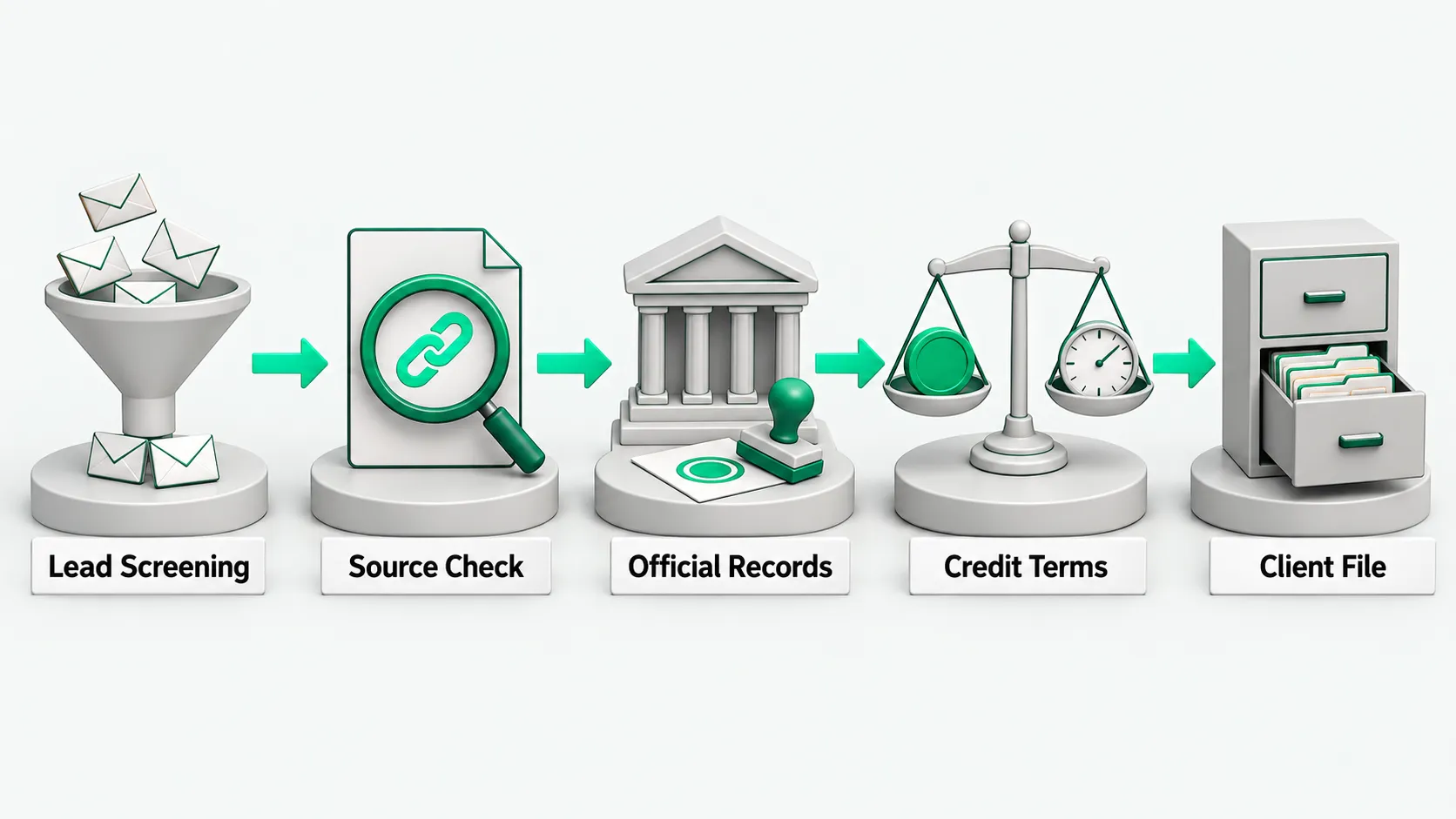
An export sales rep receives an inquiry email from an overseas buyer about machinery parts. The rep copies the sender’s email domain and the company name in the signature into the buyer due diligence system. The AI checks whether the domain registration date, the company registration record, and the contact details on the company website match.
For how to attribute where an inquiry came from, see GEO for B2B Export Websites: How to Attribute AI-Sourced Inquiries. If public import bill of lading records are available, the rep looks at the customer’s purchase categories and usual ports of discharge over recent years, and checks whether the inquired product falls inside its main line of business. If the sender uses a free webmail address, or the domain was registered very recently, the system puts a warning tag on the screening screen and reminds the rep to watch for fake leads. At the screening stage the program aggregates data and gives a starting reference for later conversations.
Spot-check source links: rule out same-name companies and stale information
The rep opens a statement in the screening report about the buyer’s business size. A source panel on the right shows a snapshot of the original web page. The rep checks each cited public page, confirms that the registered address matches the signature in the inquiry, and rules out companies in the same country with similar registered names.
For which kinds of work to hand to AI first, see Choosing Enterprise AI Use Cases: Start With Work You Can Verify on the Spot. For example, the report says the buyer runs five distribution stores locally. The rep opens the cited source and finds the page was last updated eight years ago, and the original page now redirects to a business-for-sale listing. The rep marks that finding as invalid and manually corrects the estimate of the buyer’s current size in the due diligence working file.
Large orders and payment terms: review through official channels
During negotiation the buyer asks for a usance letter of credit or open account terms. These orders carry high credit risk. The rep takes the deal out of the algorithm screening flow and files a high-risk manual review request with the sales manager. For deferred payment deals, online reviews or briefs produced by the algorithm cannot replace a bank credit reference.
The sales manager pulls documents from the official company registry in the buyer’s country and checks paid-in capital, litigation records, and the current list of directors. The manager also requests a buyer credit report through an export credit insurer. The staff handling the deal read the financial position and repayment history in the official report. They check whether the buyer has recently fallen behind on payments for goods, and whether local courts have enforcement cases against it, to judge credit risk. Every release of payment terms and every large purchase contract is approved deal by deal by a manager with approval authority, based on data from authoritative bodies. Nobody extends credit on the strength of the algorithm’s screening result.
Store the screening report and the rating decision in the customer file
After reviewing the credit report from the authoritative body, the sales manager sets the customer’s payment terms in the business system to a deposit in advance plus the balance before shipment. The rep stores the algorithm’s screening charts, the manually verified scans of official registration records, and the rating approval signed by the manager in the system file together.
When the team later moves on to samples and volume quotes with this buyer, each quote inherits the payment terms locked in the customer file. If the buyer later asks to expand the order and again asks for easier payment terms, the rep pulls the archived file, starts a reconsideration process, and re-checks the latest business status issued by official bodies. This keeps payment discipline from slipping when staff hand over accounts.
Overseas buyer due diligence: FAQ
Why does the algorithm’s estimate of a buyer’s purchasing volume often differ from reality?
The algorithm usually relies on search engines to scrape public news, trade show directories, or third-party business directories. It cannot recognize false claims a buyer makes about itself. It may treat cached pages from years ago as current data, so the estimated revenue does not match the buyer’s current size.
How can I spot false content in an AI due diligence report quickly?
Make the system attach a clickable link to the original page for every finding. When checking, look at the publication year of the cited data and the country of the page’s domain. If a finding has no source, or the link leads to an unrelated forum thread, remove that finding from the assessment report.
If the AI due diligence report finds no problems, has credit risk been ruled out?
Algorithm screening reflects only basic information visible on public web pages. It does not show that credit risk is absent. A buyer’s real ability to perform, its cash flow, and its debts in the banking system are private commercial data that external web pages do not show. Guarding against payment risk still needs official registry checks and a credit assessment from a professional agency.